Bagore Ki Haveli & Gangaur Ghat in Udaipur: Why Visit Them Together

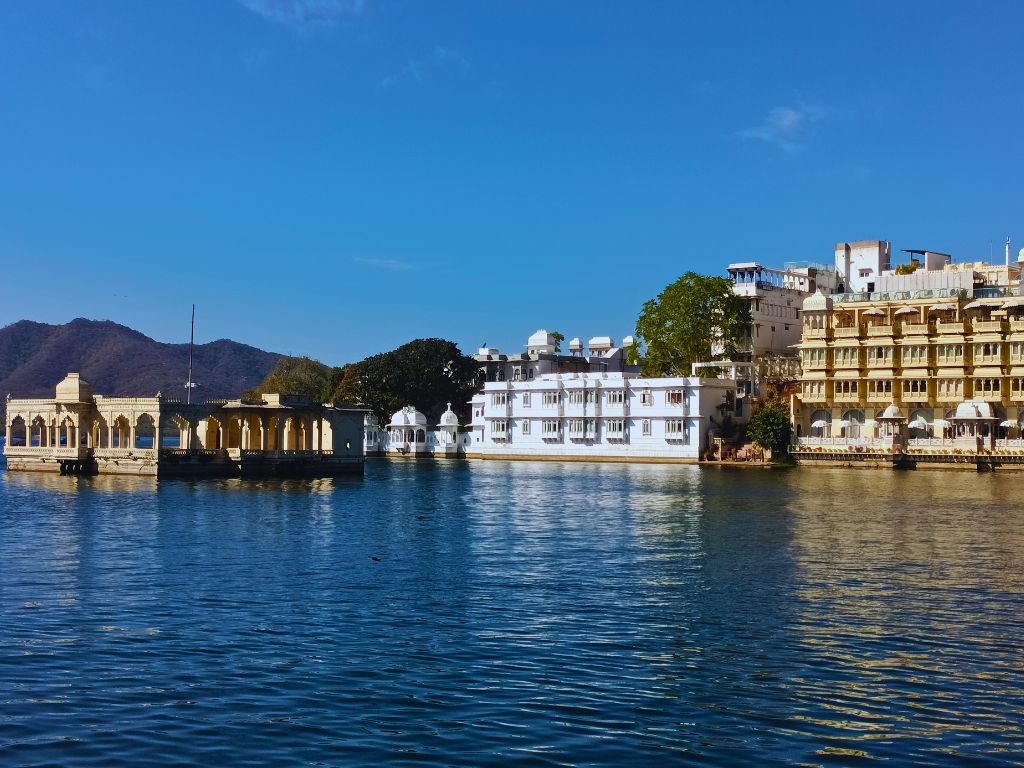
Bagore Ki Haveli, built in the 18th century by Amar Chand Badwa, Prime Minister of Mewar (1751–1778), is situated on Gangaur Ghat Marg, overlooking Lake Pichola. After Badwa’s death, the haveli passed to the Mewari royal family. In 1878, Maharaja Shakti Singh of Bagore expanded it with a triple archway, after which it was called Bagore Ki Haveli.
Following India’s independence in 1947, the haveli passed into government hands and was used for officials’ residences. Neglect led to severe damage. In 1986, the West Zone Cultural Centre (WZCC) took charge, restoring it with traditional methods, including lime mortar, lakhori bricks, local craftsmanship, and uncovered frescoes. Original murals, doors, and windows were preserved, reviving its authenticity.
Why Visit Bagore Ki Haveli & Gangaur Ghat Together
Bagore Ki Haveli and Gangaur Ghat stand side by side on Lake Pichola, making them ideal to visit together for a complete cultural experience that blends the royal lifestyle of the haveli with the spiritual traditions of the ghat; visitors can explore the museum, enjoy the Dharohar Dance Show, and witness festival rituals in a single trip, with evenings being the best time to visit as the haveli glows during performances and the ghat reflects the sunset, though photography inside the haveli requires an extra fee and festival days at the ghat demand early arrival to secure a good view.
Bagore Ki Haveli’s Architecture and Interiors
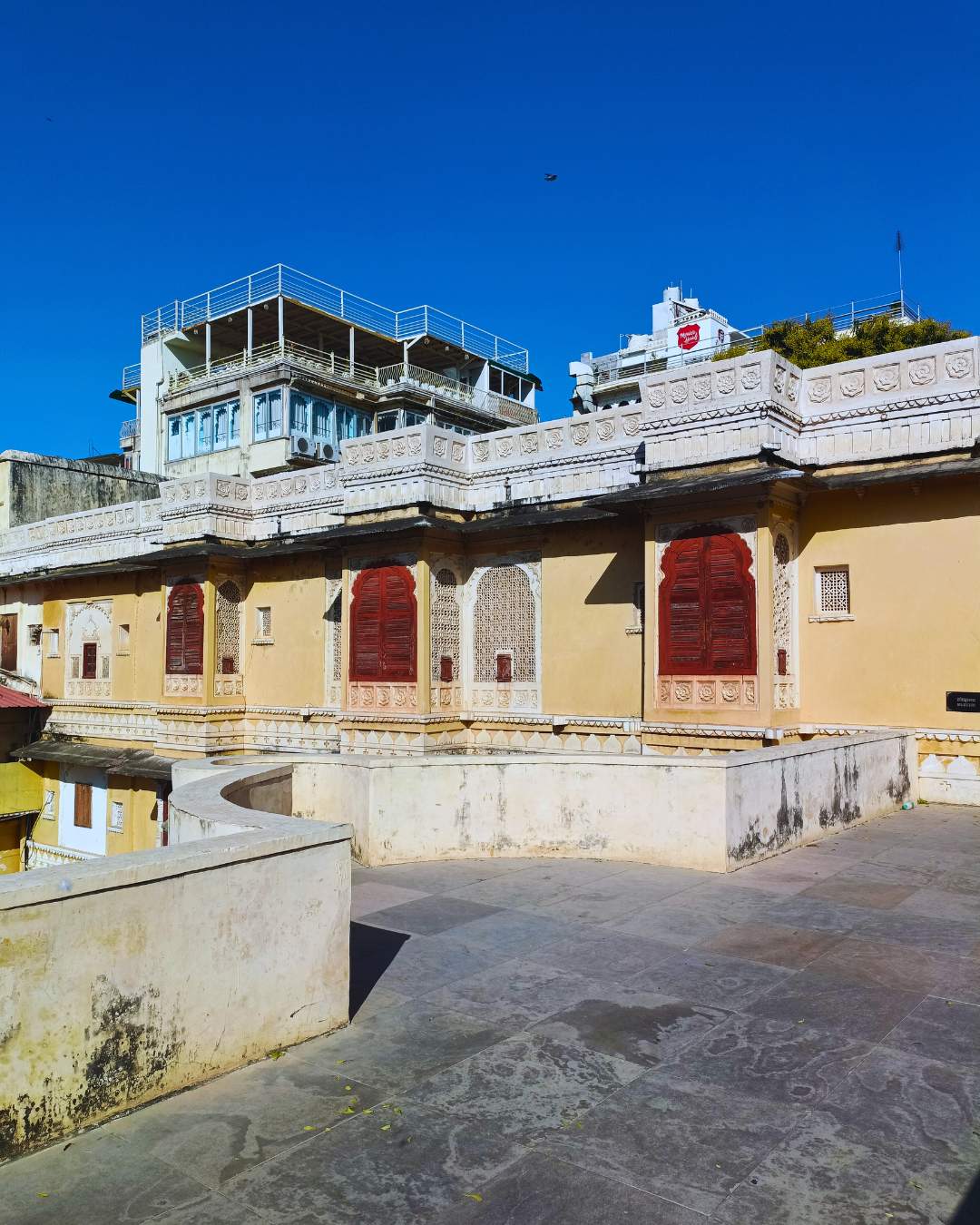
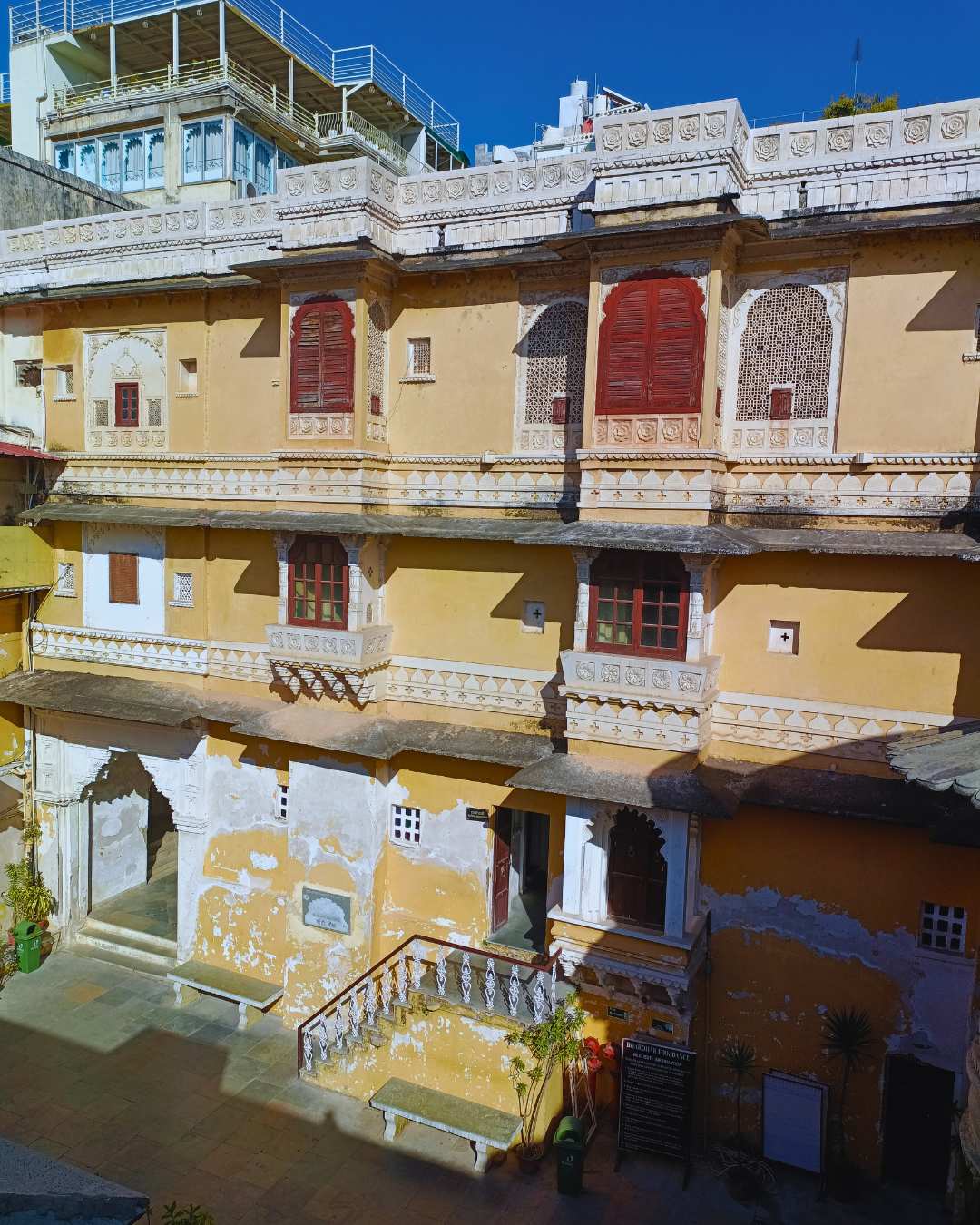
The haveli has 138 rooms, courtyards, terraces, and airy jharokhas (balconies). Inside, you’ll see:
- Mirror and glasswork across rooms.
- The Queen’s Chamber, decorated with murals and two glass peacocks.
- Colored-glass windows that light up interiors with vivid hues.
- Araish frescoes from the 18th to 19th centuries, carefully restored.
- Separate private quarters for queens and royal ladies with bedrooms, dressing areas, worship rooms, and bathrooms.
Museum and Exhibits in Bagore Ki Haveli
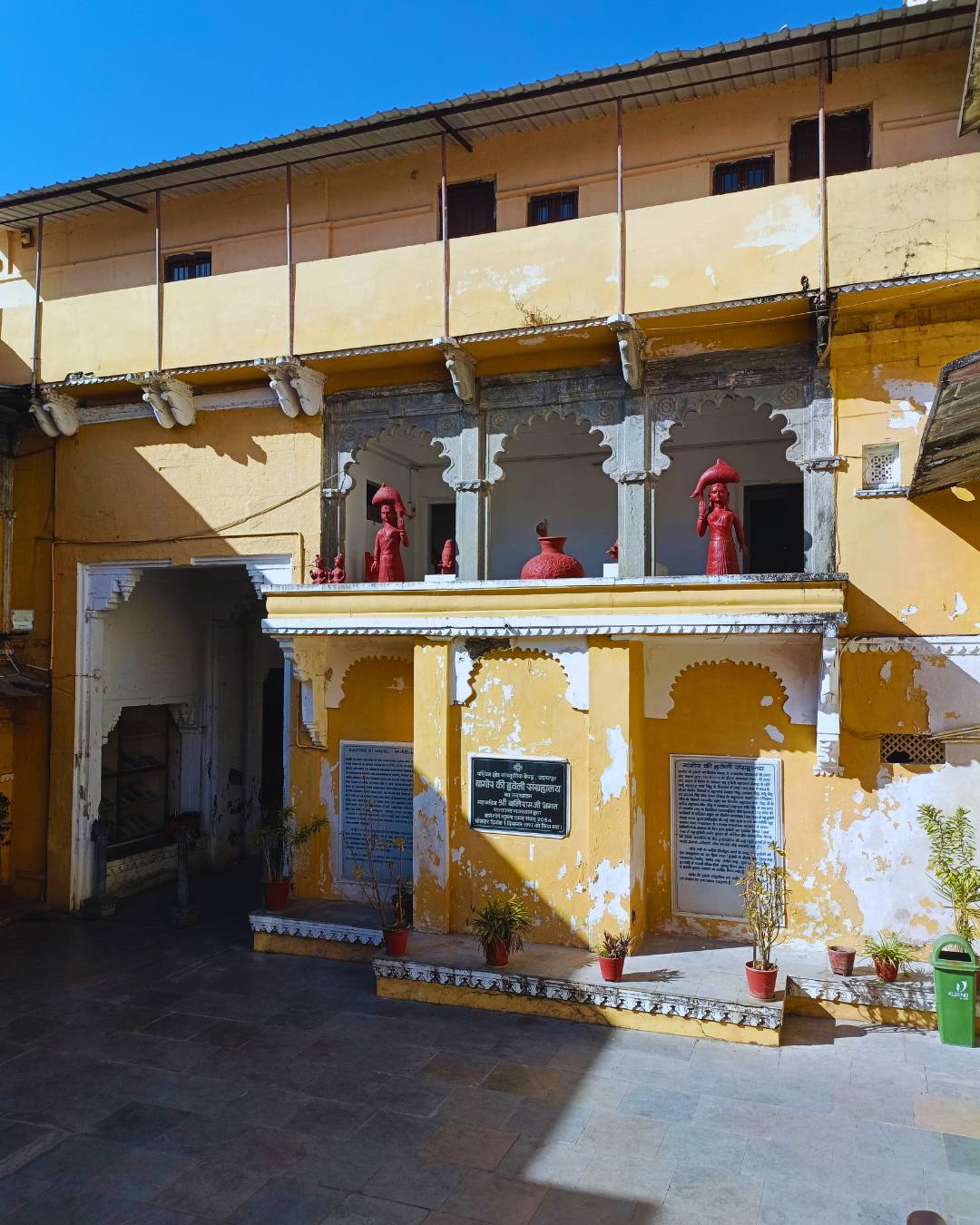
Today, Bagore Ki Haveli is a museum dedicated to Mewar’s aristocratic culture. Highlights include:
- Puppet Museum: Miniature puppets, royal courtroom scenes, and a full Indian wedding staged with dolls.
- Turban Section: Styles from Rajasthan, Gujarat, Haryana, and Punjab.
- Weapon Section: Royal arms and battlefield weapons.
- Everyday royal artifacts: Jewelry boxes, hukkas, pan boxes, nutcrackers, hand fans, rose water sprinklers, copper vessels.
👉 When I visited Bagore Ki Haveli, I was lucky to immerse myself in an art exhibition by Mr. Narendra Patel and his wife. To learn more about my experience, read this blog on: Top 10 Places to Visit in Udaipur in 3 Days.
Dharohar Dance Show in Bagore Ki Haveli
Every evening (7:00–8:00 PM), the Neem Chowk courtyard hosts the Dharohar Dance Show. Traditional music, puppet plays, and folk dances turn the haveli into a cultural stage. Tickets go on sale at 6:15 PM (Rs. 90 adults, Rs. 45 children, Rs. 150 camera fee). Lights on the haveli make the experience unforgettable.
Gangaur Ghat: Cultural Hub on Lake Pichola
Gangaur Ghat sits on Lake Pichola, in Jagdish Chowk. It is behind Jagdish Temple, close to City Palace, and right next to Bagore Ki Haveli. Just 3.5 km from Udaipur Railway Station, it’s easily reached by walking, autos, or buses. Entry is free, and it’s open 24/7.
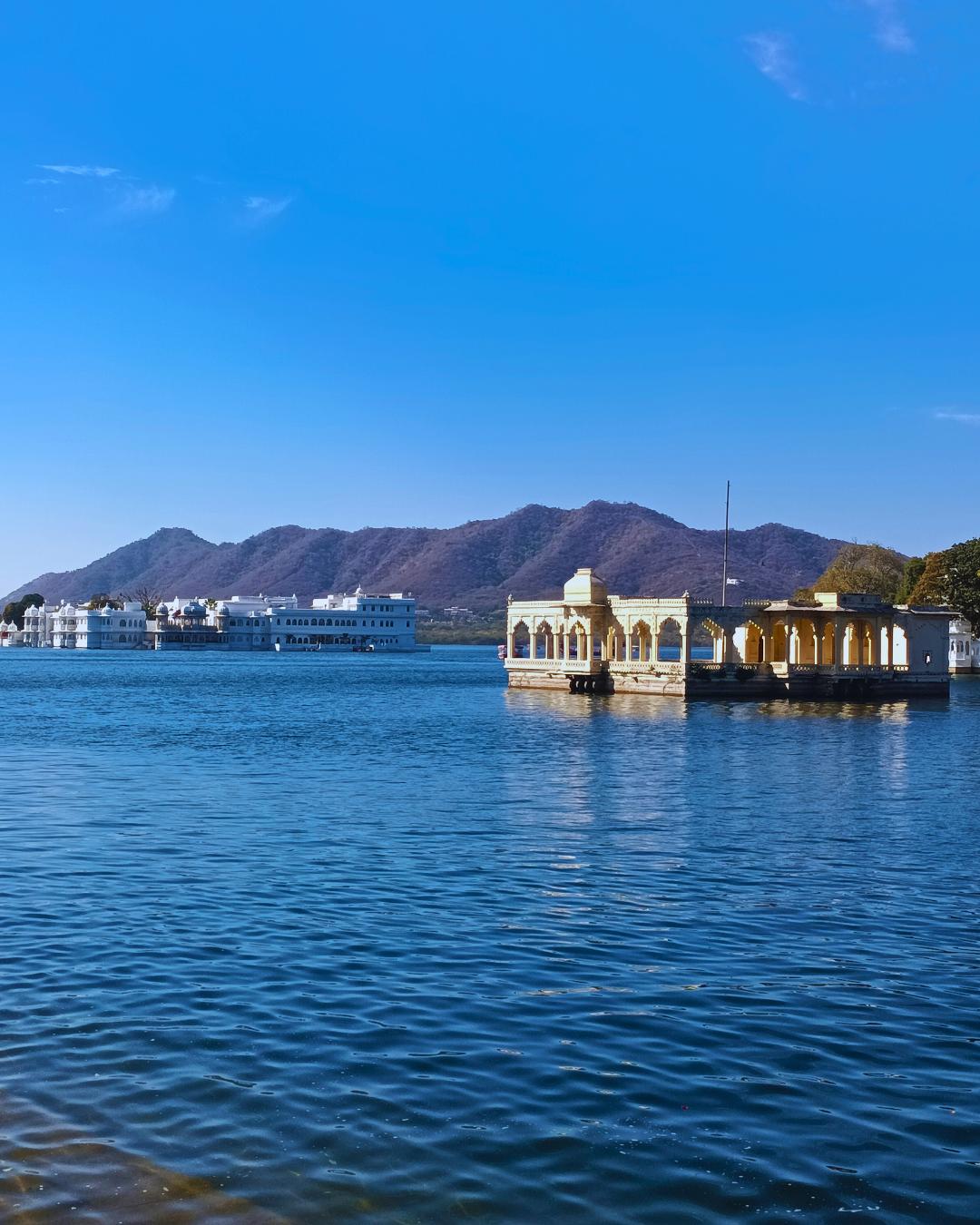
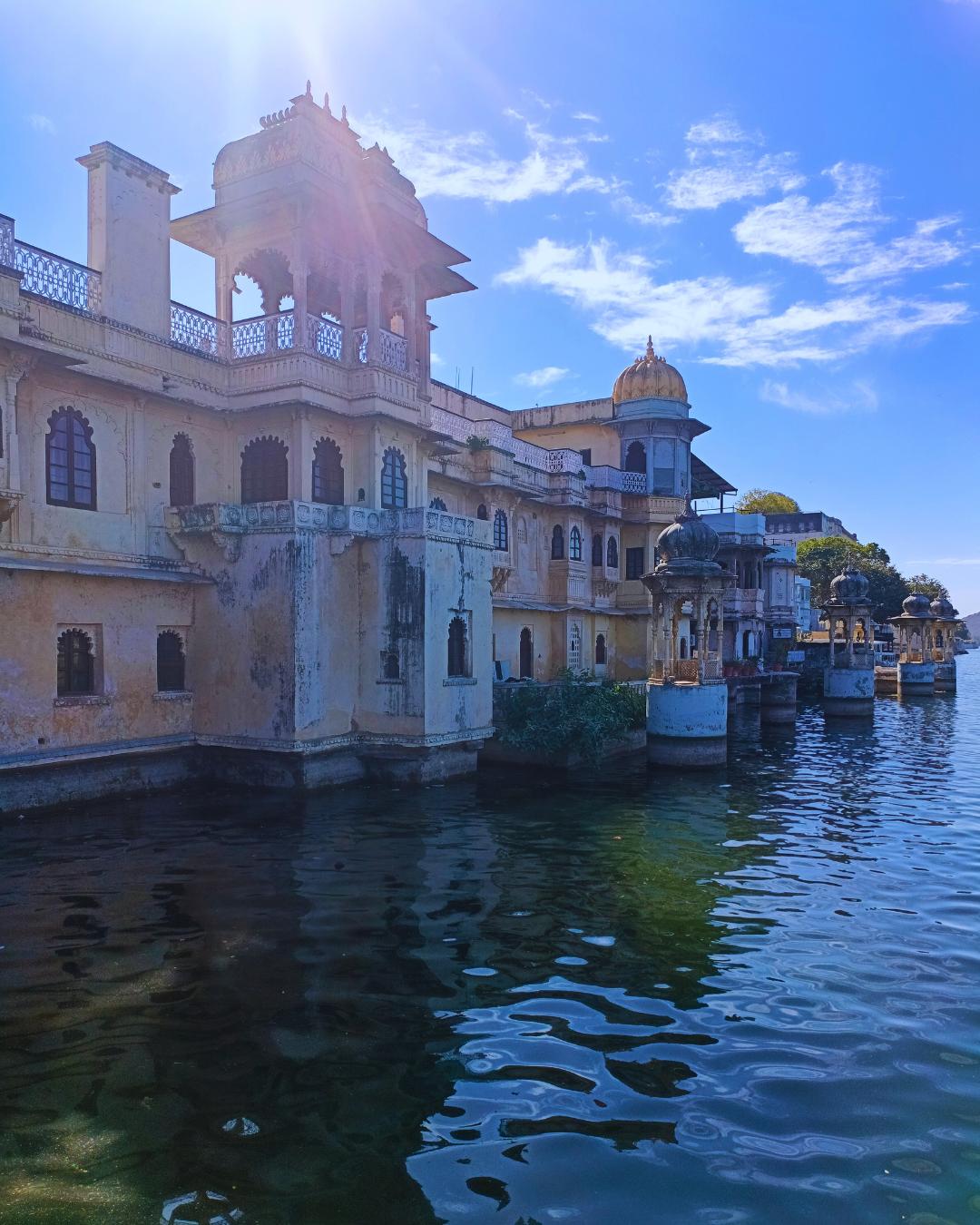
The ghat is marked by the Tripolia gates: three carved archways. Above them sits a small palace decorated with glasswork. The open lakefront provides wide views of Lake Pichola, ideal for photography, boating, or quiet reflection.
During the Gangaur Festival, women gather here to worship Goddess Parvati. Married women pray for lasting love and a happy marriage. Unmarried women pray for an ideal partner.
The ghat also hosts Jal-Jhulni Ekadashi, another colorful religious celebration.
Gangaur Ghat’s location shows historic urban planning. By sitting between temples, palaces, and public spaces, it became a natural hub for processions, rituals, and community life. Even today, it connects locals, pilgrims, and tourists in the same shared space.